Showing posts with label F. Show all posts

Yarn Friction

Friction is a very important factor in all phases of knitting. In case of yarn friction applies to resistance developed by yarn sliding over another yarn or over metallic or ceramic bodies. There are two types of friction 1) static 2) kinetic. Resistance offered by the yarn in contact with guides bars or eyelets. When the machine is started is an example of static friction while movement of yarn through the guides or needles when the machine is running is kinetic friction. Static friction is generally greater than kinetic friction. Frictional resistance or coefficient of friction depends on many factors such as:

Ginning of Cotton Seed

Ginning of seed cotton: The freshly picked cotton has seeds in it is called seed cotton. After picking the cotton fiber has to be separated from seeds. The process by which the seeds are separated from the fiber is called ginning. There are mainly two types of ginning.

General Instructions for Final Inspection (Batching)

The general instructions for final inspection(Batching) are given below,
1. All pieces will be graded on the base of 40 points per 100 linear yards mapping will be done on each piece to insure proper grading. Do not count more than 4 points per one yard.
2. All defects must be recorded and marked in final inspection and an accurate account of points made to insure proper grading.

Scouring of Man Made Fiber

Man made fiber are comparatively free from impurities and so much milder methods of scouring are applied for them,
  1. Nylon:
i. Synthetic detergent = 1.5-2 parts/L.
ii. Sodium Carbonate = 0.5-1.5 parts/L.
iii. Washing start temperature = 20-30ºC (Normal).
         = 70-80ºC (Non-heat set).
         = 90-100ºC (for heat set).
  1. Acrylic fiber: 1% Non ionic detergent temperature 80ºC.
  2. Rayon/Viscose:
i. Soap/Detergent = 0.3%.
ii. Na2CO3 = 1%.
iii. Temperature = 80-90ºC.
Acrylic fiber is the main element of our sweeter.

Fabric Machine

Fabric machine knits fabric in a continuous interrupted length of constant width, width depends on the dia of roller.
Feature of Fabric Machine: The feature of fabric machine is given below,
  1. The knit fabric at high speed.
  2. Fabric can be manually cut away from the machines.
  3. They are highly productive machines.
  4. They are versatile machines.
  5. The fabric is finished in to continuous finishing equipment.
  6. They are circular machines of the revolving needle cylinder type.
  7. After finishing the fabric is cut and sewn in to garments.
Different Fabric Machines:
  1. fabric-machine
    fabric-machine
    fabric-machine
    fabric-machine

Lap Former

Classification of Lap Former: Lap former are three types. These are,
  1. Sliver lap former.
  2. Ribbon lap former.
  3. Super lap former.
Manufacturers of lap former:
  1. TD LAP, which manufacturer is Trutzschler from Germany.
  2. UNILAP, which manufacturer is Rieter from Switzerland.
  3. A05, which manufacturer is Toyoda from Japan.
Description of a super lap former:
super-lap-former
Name of the components:
  1. Creel arrangement.
  2. Feed table.
  3. Drafting unit.
  4. Calendaring unit.
  5. Winding unit (Spool bobbin).
Technical data:
  1. Raw material = Cotton up to 1.063 inch staple.
  2. Doubling = 24(12+12).
  3. Drafting system= 3 over 3.
  4. Draft = 1.03 to 3.03
  5. Full lap weight = Up to 25kg.
  6. Delivery speed = 80-110 meter per minute.
  7. Weight per unit length = 700-1200 grains per yard.
  8. Efficiency = 85%.
Additional features of super lap former:
  1. Auto grain adjuster.
  2. Auto drafting.
  3. Stop motion for:
    1. Doffing.
    2. Sliver breakage.
    3. Lapping.
  4. Auto lap carrying device.
  5. Fault indicating lamp.
  6. Lap length measuring system.

Water Repellent and Water Proof Finishes

Certain end use of textiles such as umbrella cloth, swim suit, sports wear, rain coat, tarpaulin etc. need water repellency or water proofing.

Draw Frame

To blend, doubled and leveled the slivers are known as draw frame. Draw frame is also known as drawing. The process by which the yarn or fiber is elongated by passing it through a series of pair of rollers, each pair moving faster than the previous one is called drawing or draw frame.

Finishing Process

Finishing is the last and final steps of Garments processing technology. A textile products either it is dye or printed it needs to add some finishing feathers before marketing. Without finishing all types of garments can’t be supplied to market or to buyer.

Final Quoted costing of T- Shirt

Suppose:
1.     Body fabric consumption                 =4.05Kg/doz
     Total yarn consumption                    =4.05 +9% OWF
                                                                 =4.41Kg/ dz
2.     The current yarn price                       = $ 4.1 /kg
3.     PK knitting cost                                = $ 0.20/kg
4.     Average color dying only cost           =$1.21/Kg
5.     Flat knitting cost                               = $0.05/body
6.     Color & cuff consumption                =60g/body
     Color & cuff yarn charge                  =0.06×12+9%
                                                                  =0.78/kgdz

Types of Finishes

Finishes are two types, these are:
  1. Mechanical/ dry finishes.
  2. Chemical/ wet finishes.
Mechanical/ dry finishes: It involves physical treatment to a fabric surface to cause a change in fabric appearance. Mechanical finishing involving the applications physical principles such as friction, temperature, pressure and many more.
Chemical/ wet finishes: It involves the application of synthesis or natural chemical products, which binds the fibers more or less permanently. It is usually applied to the fabric by padding followed by drying and curing.
schemcatic diagram of wet finishes
Finished fabric performances are four types. These are,
  1. Permanent.
  2. Durable.
  3. Semi-durable.
  4. Temporary.

Garments Dyeing Flowchart

Flowchart for Woven Garments:
Garments from grey fabric
↓
Desizing
↓
Scouring
↓
Bleaching
↓
Dyeing
↓← Rinsing
↓
After treatment
↓
Washing and rinsing
↓
Hydro-extraction
↓
Drying
Woven garments made of pre-treated fabric:
Garments
↓
Pre-Wash
↓
Dyeing
↓
After treatment
↓
Washing and rinsing
↓
Hydro-extraction
↓
Drying
Flowchart for Knit Garments:
Knit wear
↓
Washing/Desizing
↓
Scouring and bleaching
↓
Dyeing
↓
After treatment
↓
Washing and rinsing
↓
Hydro-extraction
↓
Drying

Fabric Consumption of a Basic Woven Shirt

Measurement required:
  1. Body length (HSP) = 75cm.
  2. ½ Chest= 55cm.
  3. Sleeve length= 65cm.
  4. Arm hole (Straight) = 25cm.
  5. Collar length= 41cm.
  6. Collar width= 6cm.
  7. Collar band length= 32cm.
  8. Collar band width= 2cm.
  9. Pocket length= 14cm.
  10. Pocket width= 12cm.
  11. Extra yoke length= 48cm.
  12. Extra yoke height= 11.5cm.
  13. Fabric width= 56inch.
  14. Wastage= 5%.
Body Section:
A= (Body length + Allowance) × (½ chest + Allowance) × 2
   = (75+5) × (55+6) × 2 sq.cm.
   = 9760 sq.cm.
Sleeve Section:
B= (Sleeve length + Allowance) × (Arm hole + Allowance) ×2×2
   = (65+4) × (25+) ×4 sq.cm.
   =8280 sq.cm.
Collar Section:
C= (Collar length+ Allowance) × (Collar width+ Allowance) ×2
   = (41+4) × (6+2) ×2 sq.cm.
   = 720 sq.cm.
Collar Band Section:
D= (Collar band length+ Allowance) × (Collar band width+ Allowance) ×2
   = (32+3) × (2+2) ×2 sq.cm.
   = 280 sq.cm.
Pocket Section:
E= (Pocket length+ Allowance) × (Pocket width+ Allowance)
   = (14+2) ×(12+1) sq.cm.
   = 208 sq.cm.
Extra Yoke Section:
F= (Yoke length+ Allowance) ×( Yoke height+ Allowance) ×2
   = (48+4) × (11.5+3) ×2 sq.cm.
   = 108 sq.cm.
Total Fabric Consumption = A+B+C+D+E+F
     = 9760+8280+720+280+208+1508
     = 20756 sq.cm.
Now divided this amount by (2.54)2, then we will get 3217.18 sq.inch.
So, Total Fabric Required = (3217.18/56) inch.
                                           = (57.45/36) yards.
                                           = 1.6yards.
So, Fabric Consumption per dozen= 1.6× 12 +5% OLF
                                                        = (19.2+ 0.96) Yards.
                                                        = 20.16 yards.
Fabric Price per Yards is = $2.5
So, Fabric Cost = $2.5× 20.16
                          = $ 50.4

Faults & Damages of Bleaching

Faults of Bleaching: The faults of bleaching are given below,
  1. Harsh Feeling: As stabilizer if we use sodium silicate then this silicate is precipitate on the fabric and that’s why fabric become harsh.
  2. Chloramines Reaction: Chloramine reaction will occur in hypochlorite bleaching. So antichlor treatment is done. For that the permanency of whiteness is damaged and fabric becomes yellowish.
  3. Uneven Bleaching:
    1. For all types of machine faults.
    2. Faults in bleaching agent.
    3. In efficient dosing.
    4. Inadequate raw materials.
  4. Alkalinity may remain: To destroy alkalinity we used acetic acid. Dye hydrolysis and dye wastage causes of alkalinity and also reduced the fastness.
  5. Residual peroxide causes uneven dyeing. Dye wastage and shade variation.
  6. Iron stain.
Damages of Bleaching: A number of varieties of product easily oxidized by cellulose which is known as oxy-cellulose. Now a days scouring and bleaching is a combination process. Loss of strength is the causes of formation of oxy-cellulose. There are three point at which oxidizing agent can attack the glucose molecule.
Estimation of Damage:
  1. Physically: By testing strength before and after bleaching.
  2. Chemically: There are several methods. These are,
    1. Fluidity test.
    2. Copper number test.
    3. Methylene blue test.

Fabric Package

Types of Fabric Package:
1. Open fabric roll:
         i. Most of the time fabric is supplied by wrapping over a tube which is about of 7 to 8cm dia.
        ii. The widths of the fabric roll vary from 75cm to 3m.
2. Tubular knitted fabric roll:
       i. Most of the knitted fabric is found in tubular form and they are supplied in roll from.
      ii. Tube roll usually have the same width as the garments width such as T-Shirt, Polo Shirt
3. Folded fabric roll:
     i. In this type of package fabric is wrapped over 1-2cm thick and hard board.
     ii. This type of fabric package is generally used by retail seller.
4. Folded fabric cuttled:
     i. Check fabric & knitted fabric are found in this type of package.
    ii. This type of package is used to avoid distortion of these fabrics.
5. Hanging fabric package:
     i. Velvet or expensive types of fabrics are found in this package.
    ii. Only manual spreading is possible for this type of package.

Fabric Forming Method

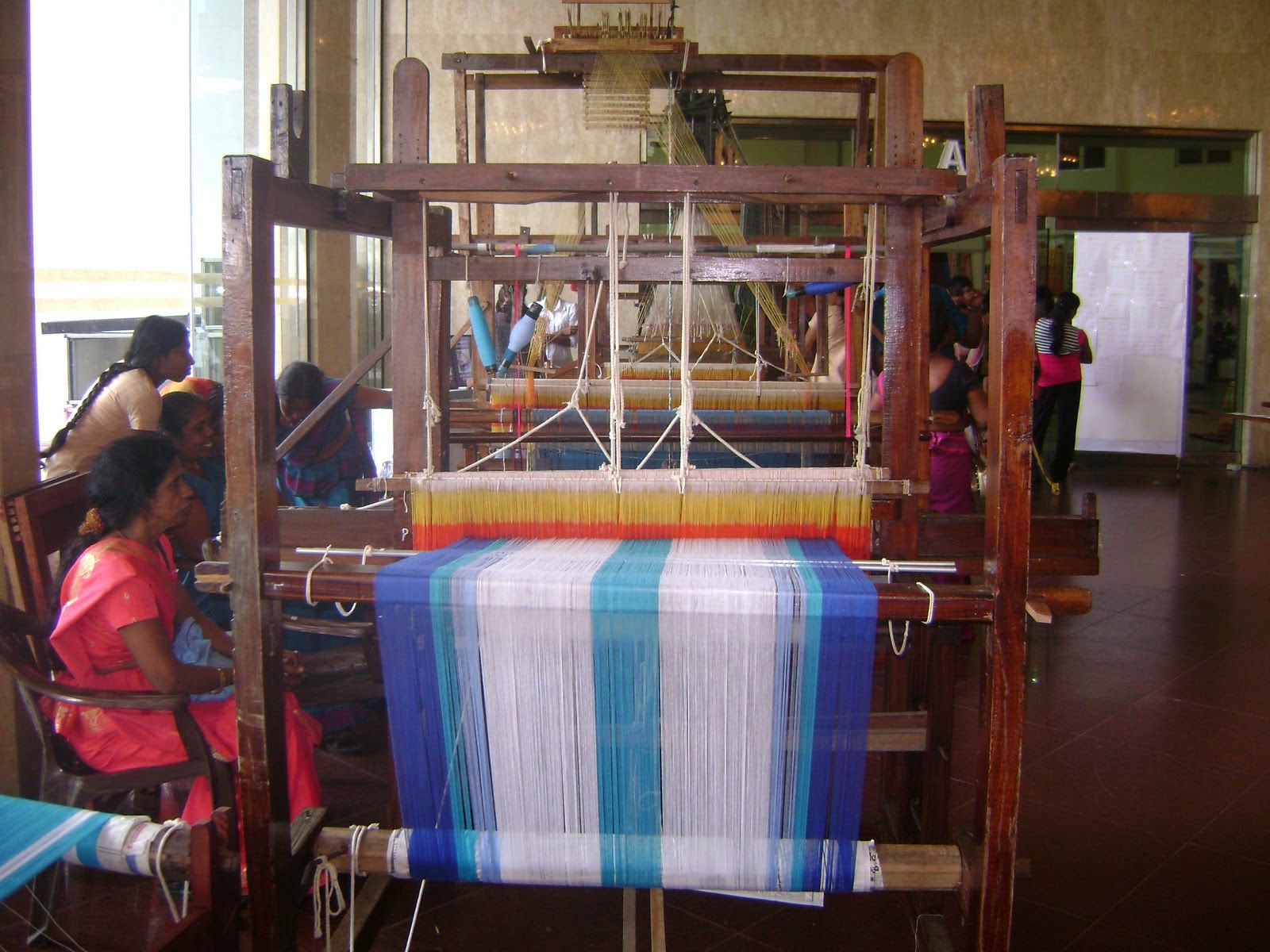
Fabrics Forming Method is three types. These are:
1. Weaving.
3. Non-Woven.

Fancy Yarn

Which yarns have deliberate imperfections are known as fancy yarn. Now a day’s fancy yarn is very demandable yarn because its defect frees yarn which is considered to be premium product. The production procedure of fancy yarn is different than normal yarn. Fancy yarn is very demandable due to its special aesthetic which imparts new characteristics. Normally fancy yarns used to make high fashion garments and also carpets, curtains, upholstery fabrics and many more.

Modal

modal-fiberThe own right for man made cellulose fiber the Modal is a generic name. To make high quality wooden pulps the modal is manufactured. Modal is very strong and stable. Modal is also soft. If we washed this it’s again became shown its softness. For clothing modal is ideal as it can breathe. More than 50% humidity than cotton the modal can absorb. Modal keep the skin dry and comfortable.

Knitting Faults

Here are some knitting faults:
1. Fabric barre or stripe.
2. Press off.
3. Miss stitch/ drop stitch.
4. Needle mark.
5. Sinker mark.
6. Oil stain.
7. Crease mark.
8. Hole.
9. Excessive slubs and entanglement in the fabric.
10. Spirility.
11. Pin hole.
12. Broken needle.
13. Tight course.
14. Missing yarn.
15. Fine yarn.
16. Coarse yarn.
17. Colored fly. Etc.

Washing Faults

Some washing faults are given below:
1. Color shade variation.
2. Crease marks.
3. After wash hole.
4. Very dark and very light.
5. Bleach spot.
6. Bottom hem and course edge destroy.
7. Running shading.
8. Over blasting/ low blasting.
9. Over grinding / low grinding.
10. Bad smell due to poor neutralization.
11. Poor hand feel.
12. To high hairiness.
13. Poor brightness.
14. High or low affect / abrasion on garments.
15. Spot on garments.
16. Out of range/ level of pH value of garments.